Stop Sabotaging Your Score: 5 Golf Ball Myths Busted by a Top 100 Coach
Stop letting bad equipment advice ruin your rounds. Discover the truth about spin, compression, and the fastest way to dial in your distance
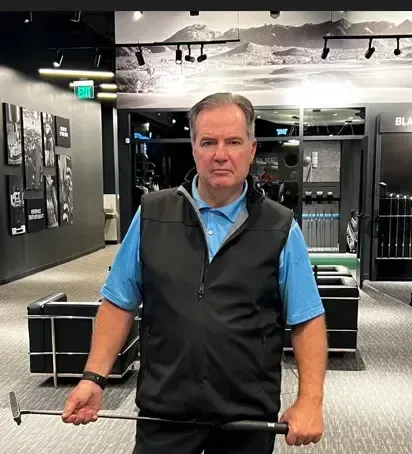
Hey everyone, Daniel Guest here from Imagen Golf.
If you've spent any time on the lesson tee with me, you know I’m passionate about controlling the variables you can control. Golf is hard enough. But out in the equipment world, there is an absolute avalanche of bad information—especially when it comes to the one piece of equipment you use on literally every single shot: the golf ball.
When you play based on bad info, you make bad decisions. And bad decisions cost you strokes before you even tee it up. Today, we are putting the five biggest golf ball myths to bed so you can start playing with confidence, consistency, and a strategy that actually lowers your scores.
Let’s get into it.
Myth #1: "I’m not good enough to tell the difference between golf balls."
I hear this every single day, and frankly, it breaks my heart. I want you to banish this thought from your mind right now.
The Truth: You don't need to be on the PGA Tour to benefit from a good golf ball. In fact, average golfers actually need consistency more than the pros do!
When you reach into your bag and pull out a random assortment of water balls, scuffed two-pieces, and found urethane balls, you are introducing massive inconsistencies into your game. If you hit a 7-iron and it comes up ten yards short, was it your swing, or was it the dead rock you found in the woods on hole 3?
You might not feel the difference in compression from one shot to the next, but the golf ball doesn't know your handicap. The physics of launch, spin, and aerodynamics happen regardless of who swings the club. If shooting your personal best matters to you, stop treating the ball as an afterthought. Give yourself the gift of consistency. Play one high-quality ball model, and watch how much easier it is to dial in your distances.
Myth #2: "Soft golf balls spin more than firm ones."
If I could magically erase one myth from the golfing consciousness, this might be it. I understand the logic: you think a "soft" ball means the clubface can grip it better, creating friction and spin.
The Truth: Said as simply as I can: Soft doesn't spin.
Golf ball spin isn't generated by overall squishiness; it’s the result of hardness differences between the internal layers of the ball. Specifically, you create spin when a soft cover is pinched against a firm layer underneath it. This is why the absolute highest-spinning balls around the green are the firmer Tour-level balls with cast urethane covers.
When you buy a ball marketed as "super soft," the inner core is incredibly soft, meaning there is no firm backboard for the cover to pinch against. You hit a wedge, the whole ball squishes, and it slides right up the face without grabbing. If you want that hop-and-stop action on the greens, you need to step away from the marshmallows and look at a ball with a urethane cover and a firmer mantle.
Myth #3: "I need a specific golf ball compression to match my swing speed."
I blame Google algorithms and old-school marketing for this one. It’s a dead horse, but I’m going to keep beating it until golfers stop losing distance.
The Truth: There is absolutely no "perfect" compression for your swing speed.
While swing speed is a small piece of the puzzle, fitting a golf ball is about optimizing your overall launch conditions. A lot of players with slower swing speeds have been brainwashed into thinking they must play a low-compression (soft) ball. But the reality? A healthy number of slower swingers struggle to get the ball airborne. They would actually be much better served by a firmer, higher-spinning ball that helps keep the ball in the air longer to maximize carry distance!
Conversely, some high-speed players might benefit from a slightly softer ball to tame excess spin off the driver. Stop looking at the swing speed charts on the side of the box. Unless you have a non-negotiable preference for how a ball feels off the putter face, look for a ball that optimizes your flight and spin, not a meaningless compression number.
Myth #4: "The more dimples a ball has, the better it flies."
This one doesn't pop up quite as often, but there's a lingering belief that a 400-dimple ball must be aerodynamically superior to a 300-dimple ball.
The Truth: There is no magic number of dimples.
Dimples are incredibly important—they create turbulence in the boundary layer of air, which reduces drag and creates lift. Without them, your drives would plummet out of the sky after 100 yards. But the count is just one small variable. The size, depth, edge radius, and pattern arrangement of the dimples all matter far more than the total number.
Manufacturers spend millions optimizing the aerodynamic package so the dimples work in harmony with the ball's core and mantle to deliver a specific trajectory. Whether the cover has 322 dimples or 388 dimples is just trivia. Focus on the ball's flight window, not its dimple count.
Myth #5: "The Titleist Pro V1 spins more than the Pro V1x."
I can't be too hard on you for this one. For a long time, the Pro V1 was the higher-spinning ball. Golfers have long memories, and old habits die hard.
The Truth: Titleist flipped the script back in 2017, and a lot of folks never got the memo!
Today, the Pro V1x is the higher-flying, higher-spinning golf ball. The standard Pro V1 offers a slightly lower, more penetrating flight with less spin. (Both balls still offer incredibly low spin off the driver and fantastic spin around the greens—where you'll notice the difference most is in your iron approaches).
Knowing your gear is half the battle. If you're a player who struggles to hold greens and needs a bit more height and stopping power, the V1x is your friend. If you already hit moonballs and need to bring the flight down and control your spin in the wind, the V1 is the play.
The Bottom Line: You are capable of playing better golf, but you have to stop fighting your equipment. Give yourself some credit, invest in a consistent, quality golf ball, and watch your scores drop.
Check out this Virtual Ball Fitting Guide From Imagen Golf
Getting fitted for a golf ball is all about working backward from the green to the tee. We want to optimize your scoring clubs first, ensure your flight windows are correct, and then find a ball that keeps your driver in play.
Take a look at these four questions and pick the answer that best describes your current game:
Your Virtual Ball-Fitting Assessment
1. What does your typical ball flight look like with your irons?
- A. I hit moonballs. My shots fly very high and can get caught up in the wind.
- B. I have a pretty standard, mid-launch trajectory.
- C. I hit low bullets. I struggle to get the ball up in the air to maximize my carry distance.
2. When you hit a well-struck 7-iron into a green, what usually happens?
- A. It hits the green and stops dead, or even spins back a little.
- B. It hits, hops once or twice, and rolls out 5 to 10 feet.
- C. It hits the green and rolls out 15+ feet, or runs right off the back edge.
3. What is your biggest struggle off the tee with your driver?
- A. I lose distance because my drives balloon up with too much backspin.
- B. I fight a severe slice or hook (lots of side-spin).
- C. I hit it pretty straight, but I want to maximize my carry and roll.
4. Let’s talk budget and feel. What’s your priority?
- A. I want Tour-level performance (maximum greenside spin) and don't mind paying $50+ a dozen.
- B. I want a great performing ball, but I lose a few rounds and prefer to stay in the $30-$40 range.
- C. I am strictly on a budget (under $30) or I absolutely must have the softest feeling ball off the putter face, even if it sacrifices some spin.
So my response to these questions would be: 1B, 2B, 3C, and 4B!
Let’s break down my profile like we were standing on the practice tee together:
- You have a reliable, mid-launch window (1B). This is great. We don't need a ball designed to artificially scoop your shots into the air, and we don't need to fight ballooning moonballs.
- Your iron spin is okay, but it can be better (2B). A 5 to 10-foot rollout on a well-struck 7-iron is manageable, but if we can get that down to 2 or 3 feet, you're suddenly looking at significantly shorter birdie and par putts.
- Your driver is straight, and you want to maximize it (3C). Hitting it straight is a massive blessing. Since you aren't fighting a nasty slice, we want a ball with low driver spin to give you that penetrating carry and a nice, healthy roll out down the fairway.
- You're smart with your wallet (4B). You want real performance, but spending $55+ a dozen on Tour balls when you occasionally lose a few just doesn't make sense.
The Verdict: The "Tour-Alternative" Urethane Ball
Based on your answers, you belong squarely in the 3-piece, mid-tier urethane category.
A lot of golfers think their only options are $20 rocks or $55 Tour balls. That’s a massive myth. The $35–$40 urethane category is the sweet spot for the average golfer who wants to shoot better scores.
These balls feature a mantle layer and a cast urethane cover (just like the premium balls), which will give you that extra grab around the greens to shorten your iron rollout. At the same time, their core compression and aerodynamic profiles are designed to keep spin low off the driver so you maximize your carry and roll.
Balls You Should Test This Weekend:
Stop buying random boxes and commit to testing one of these excellent options. They will give you 90% of the performance of a Pro V1 for a fraction of the cost:
- TaylorMade Tour Response: Incredibly soft feel, very solid greenside spin, and flies beautifully off the driver.
- Srixon Q-Star Tour: A true 3-piece urethane ball that punches way above its weight class in the wind and around the greens.
- Maxfli Tour / Tour X: Don't sleep on these. You can often find them on sale for under $35 a dozen, and they perform brilliantly in robot testing.
- Vice Pro: A fantastic direct-to-consumer option. It fits your mid-launch, low-driver-spin profile perfectly.
The Golden Rule: Pick one of these models and play it exclusively for your next three rounds. Don't mix and match. You will be amazed at how much better your distance control gets when your golf ball reacts the exact same way every single time.
This is Golf as You've Always Imagined!
Daniel is a Top 100 Golf Coach, The #1 Golf Instructor in PA, a PXG Staff Pro, a World Long Drive Coach and the Head of Golf Instruction at IMAGEN Golf the area's leading golf instruction and advisory firm, host of the IMAGEN Golf podcast and Best-Selling Author of "Unleash The Golfer Within".
For more information visit www.ImagenGolf.com or call 215-595-6299 Reach out to Daniel directly at: Daniel@ImagenGolf.com
For free golf tips and more listen to The IMAGEN Golf Podcast on Spotify, Apple Podcast or wherever you get your podcasts and follow us:
Youtube ImagenGolf
Instagram @Imagengolf
Twitter @imagengolf
Facebook Imagengolf
TikTok @ImagenGolf
Click the link above to book your first virtual or in person lesson today! Check out our NEW state-of-the-art indoor facility, The Golf Place, in Newtown, PA.